The Bottom Line - Banking on Strengths

September 2025
Planning with purpose, leading with relationships
One of our most important guiding principles at Country Club Bank is that the smartest growth is intentional, and growing from strength to strength is the best way to do it.
It’s a powerful concept, one that we believe not only benefits our business but also has the potential to positively impact our clients and community when put into action. So, what does it mean?
For us, growing from strength to strength means evolving in a way that builds on what you already do well, and by leveraging past achievements and existing capabilities to create even greater value in the future.
It’s not about chasing the next big thing. It’s about intentional progress. It’s a deliberate focus on enhancing impact, refining an approach, and continuing to grow while staying true to your core values.
In the context of business or leadership, it means:
Building on your foundation: You never lose sight of what made you successful; you amplify it.
Evolving with purpose: You grow strategically, not randomly, always guided by mission and long-term vision.
Strengthening relationships: You don’t lose touch with your personal and business connections, you deepen them.
Moving toward maturity and meaning: You shift focus from just performance and productivity to meaning and contribution.
Growing from strength to strength means planning, executing, and improving. It means anticipating long-term needs, not reacting to headlines or short-term fads. It’s the difference between skating to where the puck is going, versus just chasing it.
And the best, most purposeful, and productive growth is rooted in relationships. It's about understanding not just what our customers need today and tomorrow, but also who they are, why they do what they do, and how they want to make a difference. This belief shapes our whole outlook, from the services we offer to the way we serve boardrooms, breakrooms, and living rooms across the region.
Whether you're growing a business, supporting your family, or investing in your community, we’re honored to be part of that journey—as Country Club Bank today and soon, FNBO tomorrow, and for decades to come.
Thank you for your continued confidence and trust. As always, we’ll do everything we can to continue earning it.
— Paul Thompson, Chairman & Chief Executive Officer, Country Club Bank, Member FDIC
Economic Insights
Rate cuts, sticky inflation, and shifting consumer priorities are still a mixed bag of risk and opportunity
Although headwinds persist with inflation, job market softness, and trade policy uncertainty, the latest U.S. economic data reveal a landscape of tentative easing and cautious optimism. Businesses and consumers are pulling in the reins, but investors continue to buy the equities and bonds that finance them, providing continued strength in capital markets.
Consumer prices rose 2.9% year-over-year in August, slightly higher than July’s 2.7%. Core inflation, which excludes food and energy, remains marginally higher at 3.1%. Shelter, energy, and food away from home are among the key categories keeping inflation elevated. Price pressures remain higher, and while they’ve cooled, they’re still above the Federal Reserve’s 2% target.
In response, the Fed made its first move of 2025 by cutting its benchmark rate by 25 basis points in September, lowering the range to 4.00%–4.25%. It was the first cut since December 2024 and came after months of signaling caution.
Chairman Jerome Powell has left the door open to additional cuts later this year, with markets expecting two more by the end of the year. The rationale is clear: inflation isn’t falling as quickly as hoped, but cracks in the labor market are widening, and the Fed is adjusting.
Those cracks are increasingly visible in the jobs report. In August, the U.S. economy added just 22,000 jobs, well below expectations and continuing a trend of slower hiring through the summer.
Unemployment ticked up to 4.3%, compared to 4.2% in July, with gains concentrated in healthcare and government, while cyclical sectors such as manufacturing and retail showed signs of softness. Labor market momentum has clearly slowed, and business leaders should expect hiring conditions to become more cautious.
Markets, on the other hand, have embraced the shift in Fed policy. Stocks rallied sharply after the September rate cut, with technology names leading the way. The S&P 500 has surged roughly 30% from its April lows through late summer, and small-caps have participated as well. Still, valuations are ambitious, and investors are keenly aware that inflation and jobs data could shift sentiment quickly.
Bottom Line: It appears that the U.S. economy is in an ongoing state of soft landing. Consumers are signaling they will keep spending, but they want value and affordability. In this environment, performance will likely hinge on fundamentals: controlling expenses, maintaining access to capital, and delivering products and services that align closely with what customers value most.
— Marcus Scott, CFA, CFP®, Chief Investment Officer (CIO) for Country Club Trust Company
CFA® and Chartered Financial Analyst® are registered trademarks owned by CFA Institute.
Certified Financial Planner Board of Standards Inc. (CFP Board) owns the certification marks CFP®, CERTIFIED FINANCIAL PLANNER®, CFP® (with plaque design), and CFP® (with flame design) in the U.S., which it authorizes use of by individuals who successfully complete CFP Board's initial and ongoing certification requirements.
The opinions and views expressed herein are those of the author and do not necessarily reflect those of Country Club Trust Company, a division of Country Club Bank, or any affiliate thereof. Information provided is for illustrative and discussion purposes only; should not be considered a recommendation; and is subject to change. Some information provided above may be obtained from outside sources believed to be reliable, but no representation is made as to its accuracy or completeness. Please note that investments involve risk, and that past performance does not guarantee future results.
Investment products are not insured by FDIC/other federal agencies; are not deposits of/nor guaranteed by CCB or any of its subsidiaries/affiliates; and may lose value.
Partnership Profile
Bee Organized delivers organizing services and nationwide franchise growth — with capital from Country Club Bank
 When best friends Lisa Foley and Kristen Christian launched Bee Organized, they knew they wanted to bring art and science to the discipline of home and office organization, making it more widely known and accessible.
“We came into this industry when it was mostly one-woman shows and hobbyists,” Foley said. “We set out to shape it into a professional business model and open people’s eyes to the value of organizing.”
The duo was likely ahead of the market as well, which has worked to its advantage.
“We’ve always seen ourselves as pioneers,” said Christian. “We wanted to elevate professional organizing, to show it’s not just a side hobby, but a business that can change lives, families, and even communities.”
Scott Sjoberg has also joined the ownership group, bringing years of experience in home healthcare franchising and brand development to the table. The brand has blossomed into a multimillion-dollar organizing company with more than 45 franchise locations across 22 states, built on the principles of compassion, confidentiality and judgement-free.
“We’re invited into the most intimate spaces of people’s lives,” Foley said. “Our work is always compassionate and judgment-free. We listen, we honor the stories behind the stuff, and we build systems families can actually sustain.”
Inside homes, Bee Organized “Bees” tackle pantries, closets, garages, and whole-home resets with a calm, encouraging presence. And because clutter isn’t just a household issue, Bee Organized is increasingly supporting business-to-business needs, bringing order to backrooms, offices, and storerooms.
“Professional organizing isn’t a luxury, it’s a service that helps people breathe easier and function better,” Christian said.
Foley, Christian and Sjoberg continually invest in and research the organizing industry through coaching, peer performance groups, and practical tools that help themselves and their franchisees grow with confidence.
“Everything we pour into the system is about lifting outcomes for clients and franchisees,” Foley said.
The growth goals and network development of Bee Organized require readily available cash and capital as well. For that, they rely on a line of credit from Country Club Bank.
“At first, the line of credit was really just sleep-at-night money, something we knew was there for anything unexpected,” Foley said. “As we have gotten more sophisticated, hosting a national conference with professional speakers and adding key hires, it has given us the capital and flexibility to move ahead more quickly.”
Christian added, “It’s so nice to know we have the support of Country Club Bank. The line gives us freedom and confidence to make smart decisions at the right time.”
The relationship with Country Club Bank is grounded in local roots and reputation.
“We’ve known the Bank and people there for years,” Christian said. “They are a stellar local institution, and as a locally-based business, it was important for us to work together.”
What keeps Bee Organized there is service.
“It doesn’t feel like a typical banking relationship,” Foley said. “They listen to our needs and deliver when we need it.”
Through it all, Bee Organized has remained true to its mission: to dignify clients with confidentiality and kindness, and transform spaces so people can live lighter.
This year, the team is also leaning even more into community and giving back, by celebrating its 10th anniversary with a drive to gather 10,000 pairs of shoes for neighbors in need through Soles4Souls.
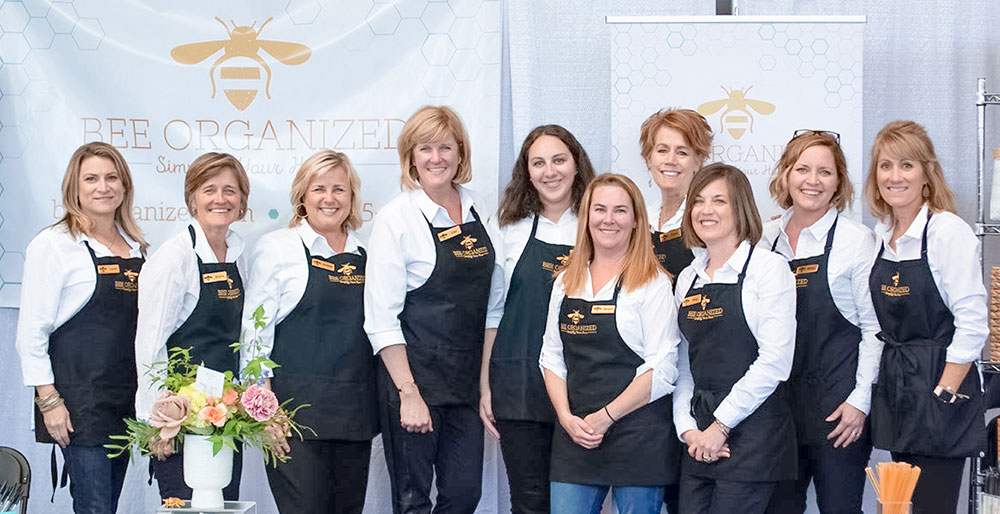
The anniversary is yet another reminder and good reason to reflect on why they do what they do.
“We’re proud to have helped shape this industry from ‘hobby’ to a real business that changes lives,” Foley said.
“This has been the hardest thing we’ve ever done,” Christian said, “but there’s nothing else we’d rather be doing, and Country Club Bank has become an important partner. We’re honored to help clients, to create flexible work for our Bees, and to give franchisees the chance to build their dream business.”
Financial Insights
Making the Most of Bonus Depreciation Benefits in 2025
 Earlier this year, Congress passed legislation restoring 100% bonus depreciation on qualified capital expenditures. For business owners, this provision is designed to encourage investment by allowing you to deduct the full cost of certain new or used assets in the year they’re placed in service, rather than spreading deductions over several years.
Bonus depreciation applies to a wide range of tangible property with a recovery period of 20 years or less. This includes equipment, machinery, technology, furniture, and specific qualified improvements on commercial buildings and places of business.
In practice, if you purchase and place qualifying assets into service this year, you may be able to expense 100% of the cost immediately.
How to Take Advantage
Plan purchases strategically. If your business is already considering equipment or improvement projects, completing them in the current tax year may maximize your benefit.
Review your capital expenditure list. Identify which planned investments qualify under the new rules.
Coordinate financing and timing. The property must be placed in service during the tax year to be eligible for the deduction.
Talk with your advisors. Bonus depreciation can interact with Section 179 expensing and other tax provisions. Your tax professional can help determine the best approach. (Disclaimer: This content is for informational purposes only and should not be construed as tax, accounting, or legal advice. Please consult your professional advisors regarding your specific situation.)
This renewed provision provides businesses with an opportunity to reinvest, grow, and improve operations while reducing taxable income. It may be especially beneficial for small and mid-sized companies making significant upgrades this year.
Banking on KC Podcast
Driven Development: A new approach to affordable housing
On the Banking on KC podcast, meet Christina Fenwick, Director of Development at Driven Development, a Kansas City–based nonprofit tackling the affordable housing crisis with urgency and innovation.
Christina shares how Driven Development is working across the housing continuum, from single-family renovations to multifamily construction, to ensure educators, healthcare workers, first responders, and others can live in the very communities they serve. Hear how mission-driven real estate is reshaping opportunity and access in our region.
Listen now: Banking on KC Podcast – Christina Fenwick, Driven Development.