The Bottom Line - Banking on Fundamentals

April 30, 2026
Built to last, designed to adapt
It’s easy to get pulled toward what looks fast, flexible, or easy. You see offers these days in banking and finance that promise quick access to capital, often with few questions and even fewer constraints.
On the surface, that can be appealing. But in our experience, the fundamentals still matter, and in fact, are more important than ever.
Over the past two decades, and really over the course of a full career, I’ve seen patterns repeat many times.
Markets rise and fall, and disruptions come and go. Whether it’s a financial crisis, a global pandemic, or even our more recent volatility, businesses that endure tend to have one thing in common: They’re built on sound practices, and they surround themselves with partners who think the same way.
That philosophy has long defined how we approach lending.
At its core, our role isn’t simply to provide capital. It’s to understand the business behind the request. What are you trying to accomplish? How does your cash flow work? Where are the risks—and just as importantly, where are the opportunities?
There’s no such thing as shortcuts or one-size-fits-all solutions in community banking, and there never have been.
That’s why we’ve always taken a more customized and thorough approach. Not because it’s policy or required paperwork, but because it’s the right thing to do for all stakeholders: our client first and foremost, our shareholders, and our business community at large.
When we truly understand a client’s business, we can structure financing and broader banking relationships that support long-term success, rather than simply solving a short-term need.
Over the years, we’ve had the privilege of working with businesses across multiple generations. These relationships have been built on consistency, trust, and a shared commitment to navigating both the good times and the more challenging ones.
That long-term perspective is especially important in periods of uncertainty, and having an experienced financial partner can make all the difference.
In our view, reacting too quickly or without full context can create more problems than it solves. Experience has taught us to step back, understand the situation, and work alongside our clients to navigate through it.
That mindset is one of the reasons we feel so good about our merger with FNBO.
While larger in scale, FNBO shares a similar philosophy to relationship-driven banking, disciplined decision-making, and a commitment to long-term outcomes. This means it’s not about changing how we operate, it’s about reinforcing and expanding what has worked for decades.
The environment will continue to evolve. It always does.
But the principles that guide strong businesses and strong banking relationships remain remarkably consistent. Stay disciplined. Stay informed. And most importantly, stay focused on building something that lasts.

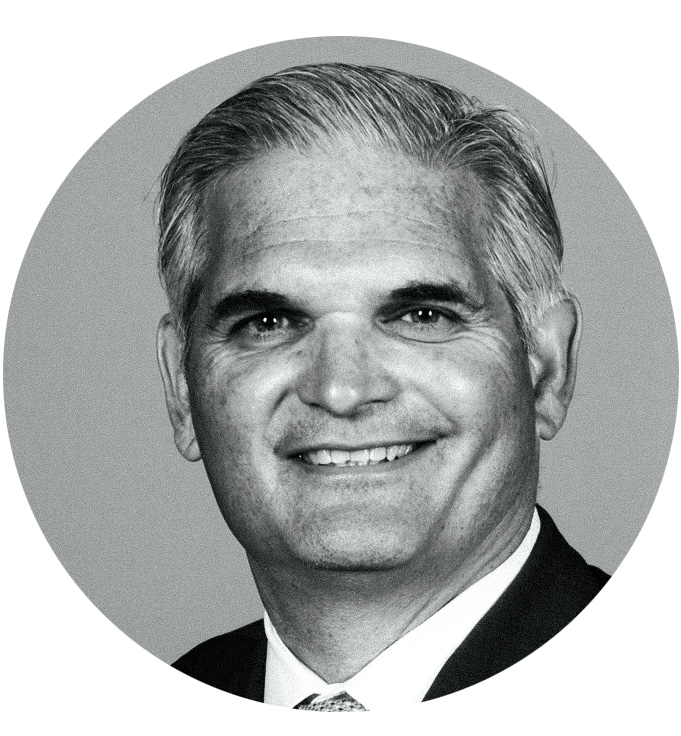
— Dan Teahan, Regional President, Community & Specialty Banking, Country Club Bank, a division of FNBO, Member FDIC
Economic Insights
Resilient markets, rising complexity
Markets entered the year with remarkable resilience, and that remains true today, but the environment is becoming more complicated.
The first quarter ended with a strong day in equities, yet both the month and quarter finished lower overall. Geopolitical tensions and rising energy prices have weighed on performance. And still, markets have held up better than many expected.
Part of that resilience reflects history. Markets have a track record of working through geopolitical shocks and recovering over time. More importantly, the underlying fundamentals remain intact.
Corporate earnings, and expectations for those earnings, continue to hold up, even in an environment where estimates often move lower. But the backdrop is shifting.
Stagflation risk, but not a reality (yet)
One of the more discussed risks today is stagflation—a period of slower growth paired with persistent inflation. We don’t see it as a high risk, but the direction of recent data makes it a credible scenario to watch.
Growth is moderating. Inflation remains above the Federal Reserve’s target. And energy prices, a key input across the economy, have moved higher again.
This creates a difficult balance for policymakers. Tightening too aggressively risks further slowing growth. Easing too soon risks re-igniting inflation.
For investors, the challenge is similar. Traditional portfolios have historically struggled in stagflationary environments, as both stocks and bonds can come under pressure simultaneously.
Inflation remains the linchpin variable. Near-term expectations have moved above 3%, while longer-term expectations remain closer to the Fed’s target. At the same time, the labor market is cooling, but not breaking. It is a “low-hire, low-fire” environment, suggesting stability, but not strong acceleration.
No misery, for now
Importantly, today’s environment is not one of extreme stress. A simple measure like the “Misery Index,” which combines inflation and unemployment, remains in the 6–7% range, well below levels seen in true stagflationary periods. In other words, risks are rising, but the system remains far from distressed.
At the same time, investor positioning deserves attention. U.S. households are more heavily allocated to equities than at nearly any point in history. That reflects confidence, but it also means the margin for error may be smaller.
Bottom Line
Markets are navigating a delicate balance: resilient fundamentals alongside rising risks. For investors, this is not a call for dramatic change. But it is a reminder of what tends to matter most over time:
- Revisit asset allocation
- Rebalance where needed
- Maintain diversification
The path forward may be less certain, but the principles remain consistent.
Stay invested, but not overextended. Stay diversified, but not complacent. And above all, stay disciplined, especially when it feels least necessary.
Invest well. Be well.

— Rusty Vanneman, CFA®, CMT®, Chief Investment Officer (CIO), FNBO Wealth
CFA® and Chartered Financial Analyst® are registered trademarks owned by CFA Institute. The Chartered Market Technicians Association (CMT Association) owns the certification marks CMT® and CHARTERED MARKET TECHNICIAN®, which it authorizes use of by individuals who have completed the CMT Association’s initial and ongoing certification requirements.
The opinions and views expressed herein are those of the author and do not necessarily reflect those of Country Club Trust Company, a division of First National Bank of Omaha (FNBO), or any affiliate thereof. Information provided is for illustrative and discussion purposes only, should not be considered a recommendation, and is subject to change. Some information provided above may be obtained from outside sources believed to be reliable, but no representation is made as to its accuracy or completeness.
Please note that investments involve risk, and that past performance does not guarantee future results. Investment products are not insured by FDIC/other federal agencies; are not deposits of/nor guaranteed by the Bank or any of its subsidiaries/affiliates; and may lose value.
Partnership Profile
Mohajir Energy and Country Club Bank: A long-term partnership, plus a closer look at today’s energy markets

For more than 35 years, Mohajir Energy has built its business and reputation with a long-term mindset, focused on disciplined energy investments and consistent cash flow across its oil and natural gas assets.
 President and CEO Jeff Mohajir and his team of geo-scientists, engineers, and economists have always taken a measured approach to their investments, partnerships, and energy exploration initiatives.
This same philosophy extends to its banking relationship with Country Club Bank.
Since 2004, Mohajir has relied on the Bank for primary depository and operating accounts across multiple entities and partnerships. Like many energy firms, the company structures its assets through individual LLCs tied to specific basins and investment funds, each requiring its own financial management.
Country Club Bank supports that complexity with tailored account structures and a deep understanding of how Mohajir Energy operates.
“They’re probably the most user-friendly bank we’ve ever worked with,” said Jeff Mohajir. “They’re hyper-focused on customer service. If we need something done, even when it may be extremely time-sensitive, they always find a way to make it happen.”
Even simpler, more common real estate transactions are handled with great care. Mohajir recently purchased and remodeled an office building to be used as the company’s headquarters. Financing was provided by the Bank.
“They not only made sure we were clear on the financing, but also that we understood the longer-term implications and benefits of the Opportunity Zone investment, and how to ensure approvals and compliance,” Mohajir said. “It all went very smoothly.”
That responsiveness has been consistent through the years, and also through change. Following the Bank’s merger with FNBO, Mohajir said he has seen continuity rather than disruption.
“From our perspective, there hasn’t been much change, and that’s been incredibly reassuring,” Mohajir said. “Both organizations clearly have a shared commitment to reinforcing relationships, and that’s why we’ve worked with Country Club Bank for so long, and also why we look forward to continuing the relationship through FNBO’s ownership.”
Bonus Q&A: Insights on energy markets
(Editor’s Note: With energy markets in the headlines daily, we thought it timely to ask Jeff Mohajir and his sons, Andrew and Samuel, who also serve as key executives at Mohajir Energy, about the latest energy market developments.)
Q: What’s the root cause of volatility in oil markets right now?
 Andrew Mohajir, VP, Business Development & Engineering: It starts with global supply and demand. The world consumes roughly 100 million barrels of oil per day. When a key chokepoint like the Strait of Hormuz is threatened, you’re potentially removing 10–15% of global supply overnight, even after accounting for possible redirects. Demand doesn’t change that quickly. People still need to drive, ship goods, and run businesses, so prices spike to rebalance the market.
Q: Why does a global event affect U.S. prices so directly?
 Samuel Mohajir, VP, Finance: Even if the U.S. isn’t directly reliant on that supply, oil is priced globally. If supply is constrained anywhere, it impacts prices everywhere. That flows through to gasoline, transportation, and ultimately the cost of goods across the economy.
Q: What are you watching in natural gas markets?
Andrew Mohajir: Natural gas is increasingly driven by structural demand. Two big forces stand out. First, LNG (liquefied natural gas) exports, we’ve significantly expanded our ability to ship U.S. gas overseas. Second, domestic demand from data centers and AI infrastructure, which require massive amounts of electricity. For years, the dominant dynamic in the power market was gas-on-coal competition. Gas prices had to remain low enough to displace coal, effectively capping the upside. Now, with coal largely out of the stack, we're seeing gas-on-gas competition: export buyers and domestic power generators bidding for the same molecules. That shifts the market from a race to the bottom to a race to the top.
Q: How do you think about risk management at Mohajir Energy?
Jeff Mohajir: We think about risk in three buckets: financial, asset, and commodity. We keep financial risk low by carrying only modest debt. We keep asset risk low by focusing on wells that are already producing cash flow, rather than on undeveloped acreage that requires capital to drill. That leaves commodity prices as our one deliberately open lever. When the other two risks feel heavy, we hedge to dial them down; when they don't, we can carry more exposure. It's a framework built for discipline through cycles, not market timing.
Q: Is long-term demand for oil declining?
Andrew Mohajir: Not based on the data. There’s a strong historical relationship between global GDP growth and oil demand. Even as efficiency improves, overall demand continues to rise alongside economic growth. The world is becoming more energy-efficient, but it’s also growing, and new growth requires oil and all the products derived from it.
Business Planning & Intelligence
The global stage is set. Is your business? Here’s a guide to help you plan—and win.
This summer, Kansas City will take center stage as the world arrives. For local businesses, the opportunity is significant: More than 650,000 visitors are expected to pass through the region during the tournament, bringing increased demand, new customers, and heightened visibility across a wide range of industries.
From restaurants and retailers to service providers and entertainment venues, the impact will be felt across the local economy. But success won’t be automatic. It will come down to preparation—understanding where the traffic will be, how customer expectations will shift, and what your business needs to do to meet the moment.
What’s inside the guide
The guide is designed to help businesses turn this moment into meaningful growth. The guide goes further, offering a “Tournament Readiness Index” to help you assess your current operations. Are your systems ready for increased volume? Can your staff handle international customers? Are you positioned to scale hours, inventory, and service?
You’ll also find training opportunities and marketing guidance to help you engage visitors and stand out in a crowded, fast-moving environment. This guide is built to help you think strategically, act early, and position your business to win during one of the largest global events in history.
Download the full guide to build your game plan and make the most of the moment.