The Bottom Line - Banking on Progress

August 2025
Building community: yesterday, today and tomorrow
At its best, community banking has always been about more than financial transactions.
It’s about people, trust, vision and the shared responsibility to make our communities stronger. That has been our mission since the beginning, and it continues to guide us today.
At Country Club Bank, we build community by first being part of it. That means being curious and asking essential questions about community needs, trends, implications and outcomes. This helps us go beyond balance sheets and business development to think more like a community partner, invested not only in the tangible, but also in the intangibles, too, such as community service, goodwill and generosity.
One straightforward example is the design of our headquarters. It has become an actual gathering space. From alum events to entrepreneurial exchanges to nonprofit celebrations, thousands have come together in our atrium and meeting rooms, not just for banking, but for connection. When people gather, share ideas and celebrate progress, the community becomes stronger and more resilient.
We also become part of our community by rolling up our sleeves and investing our time and talent. That’s why you’ll find our people volunteering with local nonprofits, serving on boards and giving their time as readily as their financial support. We don’t just write checks, we stand alongside the organizations we support, learning their missions and amplifying their work.
This philosophy naturally extends into the business side of the bank. Whether in commercial lending, wealth management or capital markets, we start by seeking to understand. What do our customers need, and where are they going? What problems are they trying to solve?
Sometimes the answer involves us directly, and sometimes it doesn’t. But by putting the community’s—and customers’—needs first, we earn trust and the privilege of being of service when opportunities arise. This simple approach has worked because of clarity of purpose and putting the community first.
As we look ahead, change will come, as it always does. But one thing won’t change: our belief that the best way to do business is to be a caring and committed member of our community.
That’s not just our past; it’s our future. And we remain deeply committed to earning trust, fostering understanding, strengthening connections and building a community that reflects the best of who we are and what we stand for.
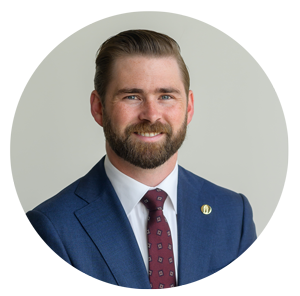
— PJ Thompson, Chief Financial Officer & Chief Operations Officer, Country Club Bank, Member FDIC
Economic Insights
Resiliency, caution and shifting consumer choices
Though the clouds of tariffs, inflation and slower growth remain, consumer behavior continues to show remarkable resilience. Can it continue?
Consider the “McDonald’s Effect” playing out across the country. Drive-thru lines for $9 value meals are swelling, while sales at higher-priced fast casual restaurants have softened.
This is more than a restaurant industry trend, it’s a macro signal. Consumers are still spending, but they’re trading down. The $9 “value” meal wins, while the $15–$20 rice or salad bowl struggles.
For business leaders, the lesson is clear: value matters. Brands and businesses that meet consumers where they are on price and convenience are gaining share, while others face headwinds. It will be interesting to see how this develops in the coming months.
The broader economy continues to remain steady. Consumer prices rose 2.8% year-over-year in July, slightly higher than June’s 2.7%. Core inflation is also stubbornly stuck at an elevated level, coming in at 3.1% in July, higher than the 2.8% June core inflation rate.
The Federal Reserve held rates steady at 4.25–4.50% at its July meeting, signaling a wait-and-see approach. However, Fed Chairman Jerome Powell has clearly opened the door to a rate cut at the next meeting in September.
The labor market is stable but slowing. In July, the U.S. economy added 73,000 jobs, while unemployment rose to 4.2%, compared to 4.1% the month before. Gains came from healthcare, education and government, while manufacturing and retail softened.
Average GDP forecasts for 2025 are muted at 1.3%–1.5%, down from earlier estimates near 1.7%. Tariffs with sweeping duties on autos, steel and aluminum, and a broad 10% baseline import tariff are pushing costs higher. For businesses, that means ongoing pressure to manage margins and re-evaluate supply chains.
Bottom Line: The economic environment reflects both resilience and restraint. Consumers are signaling they will keep spending, but only when value is clear. For business leaders, the implications are twofold: manage costs and pricing strategies carefully, and pay attention to how consumer priorities shift in real time. Positive performance will require a focus on the fundamentals of cost control, access to capital and offerings that align with what customers value most.

— Marcus Scott, CFA, CFP®, Chief Investment Officer (CIO) for Country Club Trust Company
CFA® and Chartered Financial Analyst® are registered trademarks owned by CFA Institute.
Certified Financial Planner Board of Standards Inc. (CFP Board) owns the certification marks CFP®, CERTIFIED FINANCIAL PLANNER®, CFP® (with plaque design), and CFP® (with flame design) in the U.S., which it authorizes use of by individuals who successfully complete CFP Board's initial and ongoing certification requirements.
The opinions and views expressed herein are those of the author and do not necessarily reflect those of Country Club Trust Company, a division of Country Club Bank, or any affiliate thereof. Information provided is for illustrative and discussion purposes only; should not be considered a recommendation; and is subject to change. Some information provided above may be obtained from outside sources believed to be reliable, but no representation is made as to its accuracy or completeness. Please note that investments involve risk, and that past performance does not guarantee future results.
Investment products are not insured by FDIC/other federal agencies; are not deposits of/nor guaranteed by CCB or any of its subsidiaries/affiliates; and may lose value.
Partnership Profile
Building homes — and a partnership — that stand the test of time
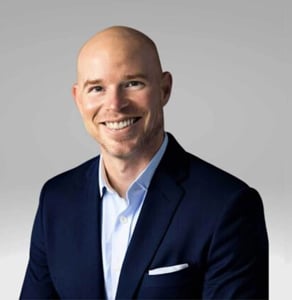 Tommy Bickimer, CEO of Bickimer Homes, is not afraid to get his hands dirty.
When we caught up with him recently on a late summer afternoon, Bickimer was power-washing the mud off a Bobcat at a job site.
“We try to lead by example around here,” Bickimer said. “It shows everyone in our company that we’re all in this together, and that every role matters.”
That spirit of humility and hard work is a hallmark of Bickimer Homes, a family-owned homebuilder with deep roots in Kansas City.
“We always say Bickimer Homes isn’t just one person,” said Bickimer. “It’s not me, it’s not just my family, it’s everybody on our team. That’s how we run our company.”
Founded in 1982, Bickimer Homes began small, and Tommy Bickimer quite literally grew up in the business, sweeping job sites, mowing yards and working summer jobs on framing and painting crews.
After earning a construction management degree at Colorado State University and working for a national builder, Tommy returned home in 2005 to join the family company.
It wasn’t an easy time. The Great Recession soon forced the company to scale back. Still, that season gave him hands-on knowledge of every aspect of the business, from field work to office operations, and prepared him to lead as the company rebounded.
Today, Bickimer Homes employs 17 people and builds about 40 to 45 homes per year. The focus is now on higher-end homes, where buyers value high quality and customization.
Navigating challenges with the right banking partner
Bickimer said that after the recession, he and his family sought out a bank that truly understood construction and the local business market.
“We always wanted to work with a local bank,” Bickimer said. “We were introduced to Country Club Bank, and there was an instant connection. We felt like they believed in local businesses the way we do.”
That belief has proven critical. When interest rates nearly doubled in recent years, Country Club Bank stepped up with creative terms and financing options.
“Their competitive rates and willingness to help us meet market demands have been a huge boost for our growth and expansion,” Bickimer said. “The last few years alone will always make me a loyal fan of Country Club Bank.”
Beyond rates, Bickimer said Country Club Bank’s responsiveness stands out, too.
“Just recently I needed to get a wire out,” Bickimer said, “I made one phone call, and it was done in an hour. That kind of service is incredible.”
For nearly two decades, Amy Wilcox has been part of the Country Club Bank commercial lending team. She now serves as Bickimer Homes’ primary banker.
“What stands out is their character and how they do the right thing. They’re building very high-end custom homes, but they’re also mentoring young builders and supporting affordable housing,” said Wilcox. “That kind of culture makes them a great fit for us—we’re both committed to doing the right thing, and focused on long-term relationships.”
Bickimer especially appreciates the flexible lending structure. Through a guidance line, the company can secure construction loans to cover the procurement of land, materials and labor.
“They’ve always said, ‘We just want to grow with you,’” Bickimer said. “They’ve increased that line over the years, and I don’t have to wait long for an answer; they’re flexible, supportive and quick to respond.”
That financial foundation allows Tommy’s team to focus on what they do best: building dream homes and serving clients.
Communication is another differentiator for Bickimer. Bickimer project managers upload daily progress photos so clients can follow their project in real-time.
“What sets us apart is customer service and communication,” Bickimer said. “When you’re building someone’s dream home, communicating is key to make sure that expectations match the results.”
For Tommy, the partnership with Country Club Bank is another example of good communication at work.
“At other banks, you may not even know who the president is,” Bickimer said. “At Country Club Bank, I know everybody, and they know me. They care about our business, and they show it with every interaction.”
Management Insights
Why managing change isn’t enough. You’ve got to think it, too
 Picture this: It’s 2019, and you’re the CEO of a midsize company. A crystal ball tells you a global pandemic is just months away. What would you have done differently?
Or imagine being the HR leader in 2015, advocating for remote work when few believed in it. With foresight, how might you have persuaded your team to act sooner?
These scenarios highlight the truth April Rinne, futurist and author, shares in her Harvard Business Review article, “Change Management Requires a Change Mindset.”
Uncertainty is unavoidable, and our traditional tools for “managing” it often fall short. We like to talk about change management, but what really matters is developing a change mindset. Defined as the ability to navigate the unknown with awareness, curiosity and resilience.
Beyond spreadsheets and systems
For more than a century, change management has leaned heavily on processes and frameworks designed to create a sense of control. But no spreadsheet or step-by-step framework can account for the human experience of uncertainty, fears, anxieties and biases that shape decision-making. Traditional change management often overlooks these realities, which in turn weakens the very strategies it aims to support.
Rinne argues that our ability to lead change starts with managing ourselves.
Instead of asking, “What do we do about this?” leaders must ask, “Am I approaching this from a place of hope or fear?” By openly sharing orientations toward change, teams can improve trust, strengthen their culture and make better decisions.
From “What Is” to “What If”
Another common pitfall is the search for “the” future, as if there’s only one correct version waiting to be predicted. In reality, there are many possible futures, unfolding and shifting constantly. Preparing for uncertainty means moving from “what is” to “what if.”
Rinne highlights scenario mapping as a practical tool. Leaders should imagine multiple futures and prepare accordingly. The exercise isn’t about predicting which one will happen; it’s about developing the muscles to adapt when any of them could.
The Advantage of Midsize Companies
Every organization struggles with change, but midsize companies may be best positioned to adapt. Unlike large corporations weighed down by bureaucracy, or small businesses limited by resources, midsize companies have both agility and capacity. By embracing a change mindset, you can experiment, involve diverse voices in planning and build what Rinne calls their “flux capacity”, a tolerance for uncertainty that becomes a strategic advantage.
Change management is no longer about simply charting tasks, steps and outcomes. It requires a new way of thinking.
As April Rinne writes, “Change mindset drives change management, not the other way around.”
Leaders who cultivate openness, scenario thinking and a willingness to confront uncertainty directly will not only survive disruption but shape what comes next.
The future isn’t fixed. It’s full of possibilities. The question is whether we’re prepared to meet it with fear or with foresight.
Treasury Solutions
Protecting payments and empowering growth
Managing a company’s finances and cash flow today is about much more than balancing the books. It’s about integration, efficiency and security.
While businesses are always concerned with maximizing return on idle funds, they have also become far more focused on maximizing time. Treasury services help by integrating financial systems and minimizing the pain of reconciliation.
Whether it’s automating the flow of information into your ERP, segregating accounts for safety or streamlining receivables, the goal is the same: to free up staff from repetitive tasks so they can focus on more strategic initiatives.
Protecting against fraud
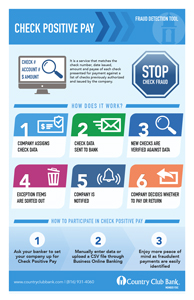 Unlike consumers, who enjoy significant protections, businesses bear more liability for fraudulent activity. That’s why solutions like Positive Pay, which allow Country Club Bank and its clients to monitor check activity jointly, are vital.
“We’re often the first call when a client sees something suspicious,” said Elise Jones, Vice President and Treasury Sales Manager. “Which is why we have solutions that stop fraud before it impacts their business.”
Classic tools, modern flexibility
Country Club Bank’s Treasury Solutions also include staples like ACH and wire origination management, lockbox services (especially valuable for health care, utilities, municipalities, nonprofits and real estate companies) and best-practice account structures that separate operating, tax, payables and receivables.
A well-structured treasury setup not only improves efficiency but also adds essential layers of protection against unauthorized access.
Service and speed that stand out
Personal and professional service is at the heart of the Country Club Bank treasury solutions model. From onboarding to ongoing support, clients work with a live team that answers calls directly and responds to emails within minutes.
“We can implement fraud solutions same-day,” Jones said. “Our teams really excel in this area. I’ve never seen that level of urgency and care in the industry.”
Treasury Solutions help businesses stay efficient, secure and prepared for the future. To learn more, visit Country Club Bank Treasury Solutions.