Client Spotlight- Mohajir Energy
Mohajir Energy and Country Club Bank: A long-term partnership, plus a closer look at today’s energy markets

For more than 35 years, Mohajir Energy has built its business and reputation with a long-term mindset, focused on disciplined energy investments and consistent cash flow across its oil and natural gas assets.
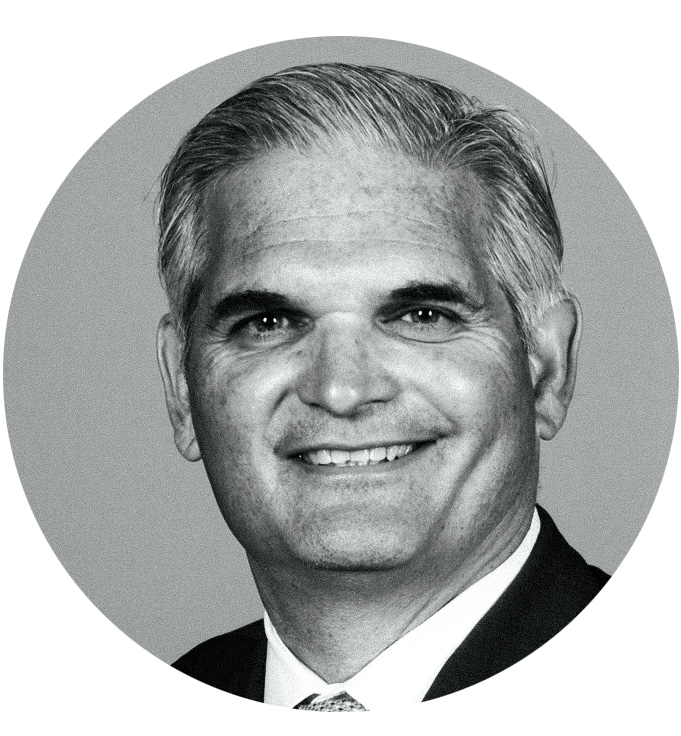 President and CEO Jeff Mohajir and his team of geo-scientists, engineers, and economists have always taken a measured approach to their investments, partnerships, and energy exploration initiatives.
This same philosophy extends to its banking relationship with Country Club Bank.
Since 2004, Mohajir has relied on the Bank for primary depository and operating accounts across multiple entities and partnerships. Like many energy firms, the company structures its assets through individual LLCs tied to specific basins and investment funds, each requiring its own financial management.
Country Club Bank supports that complexity with tailored account structures and a deep understanding of how Mohajir Energy operates.
“They’re probably the most user-friendly bank we’ve ever worked with,” said Jeff Mohajir. “They’re hyper-focused on customer service. If we need something done, even when it may be extremely time-sensitive, they always find a way to make it happen.”
Even simpler, more common real estate transactions are handled with great care. Mohajir recently purchased and remodeled an office building to be used as the company’s headquarters. Financing was provided by the Bank.
“They not only made sure we were clear on the financing, but also that we understood the longer-term implications and benefits of the Opportunity Zone investment, and how to ensure approvals and compliance,” Mohajir said. “It all went very smoothly.”
That responsiveness has been consistent through the years, and also through change. Following the Bank’s merger with FNBO, Mohajir said he has seen continuity rather than disruption.
“From our perspective, there hasn’t been much change, and that’s been incredibly reassuring,” Mohajir said. “Both organizations clearly have a shared commitment to reinforcing relationships, and that’s why we’ve worked with Country Club Bank for so long, and also why we look forward to continuing the relationship through FNBO’s ownership.”
Bonus Q&A: Insights on energy markets
(Editor’s Note: With energy markets in the headlines daily, we thought it timely to ask Jeff Mohajir and his sons, Andrew and Samuel, who also serve as key executives at Mohajir Energy, about the latest energy market developments.)
Q: What’s the root cause of volatility in oil markets right now?
 Andrew Mohajir, VP, Business Development & Engineering: It starts with global supply and demand. The world consumes roughly 100 million barrels of oil per day. When a key chokepoint like the Strait of Hormuz is threatened, you’re potentially removing 10–15% of global supply overnight, even after accounting for possible redirects. Demand doesn’t change that quickly. People still need to drive, ship goods, and run businesses, so prices spike to rebalance the market.
Q: Why does a global event affect U.S. prices so directly?
 Samuel Mohajir, VP, Finance: Even if the U.S. isn’t directly reliant on that supply, oil is priced globally. If supply is constrained anywhere, it impacts prices everywhere. That flows through to gasoline, transportation, and ultimately the cost of goods across the economy.
Q: What are you watching in natural gas markets?
Andrew Mohajir: Natural gas is increasingly driven by structural demand. Two big forces stand out. First, LNG (liquefied natural gas) exports, we’ve significantly expanded our ability to ship U.S. gas overseas. Second, domestic demand from data centers and AI infrastructure, which require massive amounts of electricity. For years, the dominant dynamic in the power market was gas-on-coal competition. Gas prices had to remain low enough to displace coal, effectively capping the upside. Now, with coal largely out of the stack, we're seeing gas-on-gas competition: export buyers and domestic power generators bidding for the same molecules. That shifts the market from a race to the bottom to a race to the top.
Q: How do you think about risk management at Mohajir Energy?
Jeff Mohajir: We think about risk in three buckets: financial, asset, and commodity. We keep financial risk low by carrying only modest debt. We keep asset risk low by focusing on wells that are already producing cash flow, rather than on undeveloped acreage that requires capital to drill. That leaves commodity prices as our one deliberately open lever. When the other two risks feel heavy, we hedge to dial them down; when they don't, we can carry more exposure. It's a framework built for discipline through cycles, not market timing.
Q: Is long-term demand for oil declining?
Andrew Mohajir: Not based on the data. There’s a strong historical relationship between global GDP growth and oil demand. Even as efficiency improves, overall demand continues to rise alongside economic growth. The world is becoming more energy-efficient, but it’s also growing, and new growth requires oil and all the products derived from it.