The Bottom Line - Banking on Progress

July 30, 2026
What's changing, and what's staying the same
Change can bring many good things in a merger and acquisition, such as new capabilities, new opportunities, and new benefits. But it naturally brings many questions as well.
Our acquisition by FNBO is no exception. While we’re still a couple months away from becoming FNBO, our clients, employees, and community partners understandably want to know what this transition means, what may change, and what will remain the same.
We are committed to keeping you informed throughout the process, and even more committed to preserving the relationships, values, and personalized service you have come to expect. Here is how we are working to meet these commitments.
Just as we’ve done since the acquisition was announced in May 2025, we will continue to share important information to explain what is happening and help you understand why.
When action is required, we will clearly explain what you need to do and when. We will answer your questions directly and keep you informed as systems and services change.
These details are important, but your overall banking experience, especially when interacting with our team, is even more important.
Our commitment to excellence and client responsiveness remains steadfast. So does our belief in local relationship banking, sound financial stewardship, and being present in the communities we serve. As a 6th-generation privately held family business, FNBO understands the needs and preferences of privately held business owners and their desire to work with other locally owned and operated companies.
You will continue to work with many of the same bankers you know and trust, who understand your goals, appreciate your history with us, and are invested in your success.
Names and processes may evolve, but our fundamental purpose remains the same: to help our clients, businesses, families, and communities thrive.
Throughout this transition, consistency will be just as important as clarity. Our teams will continue reaching out, listening, and responding to your questions and comments. And we will continue to provide useful and thoughtful perspectives to help you make confident financial decisions.
Trust is something we earn — every single day.
We also know that trust is not built through a single announcement or series of communications alone. Trust is earned through many interactions over time by showing up, following through, and keeping our promises.
There will be adjustments ahead, and we will work to make them as clear and manageable as possible. At the same time, we are genuinely excited about the opportunities this new chapter with FNBO creates, for all of us.
The big takeaway: FNBO offers greater capabilities and resources while preserving the trusted relationships that have always defined us and the way we serve. The evolution will continue, but our highest priority will remain: delivering on excellence for our clients, associates, partners, and communities.
Please visit www.fnbo.com/ccb for up-to-date conversion information including resource guides and timelines. Thank you for the ongoing opportunity to be of service.
— Leigh Adams, Marketing Director, Business Segment, Country Club Bank, A Division of FNBO, Member FDIC
Economic Insights
When expectations are high
Global stocks declined modestly in June, but that small pullback obscured a remarkable quarter and first half of 2026.
The S&P 500 and Nasdaq recorded their strongest quarters since 2020. The Dow posted its best first half in five years, small-cap stocks had their strongest start since 1991, and semiconductor stocks delivered their strongest quarter on record.
Just as encouraging, market leadership broadened beyond the Magnificent Seven technology companies. That is generally a healthy sign—and a reminder of the value of diversification.
Bonds also performed well. Investment-grade bonds recorded their strongest first half in several years as Treasury yields declined from their highs and investors increasingly sought high-quality income. Long-term Treasuries rallied, while high-yield bonds benefited as widely anticipated defaults failed to materialize.
Artificial intelligence remains the market’s dominant investment theme. Businesses are investing hundreds of billions of dollars in AI infrastructure, data centers, semiconductor manufacturing and power generation. If those investments produce meaningful productivity gains, they could support economic growth and corporate earnings for years.
The market is betting that AI will allow businesses to produce more with the same or fewer resources. Early evidence is mixed. Some AI applications are already improving efficiency, while others show little measurable impact. The real question is whether productivity gains will be large enough, and arrive quickly enough, to justify today’s high expectations.
While artificial intelligence has driven much of the market's recent gains, leadership has begun to broaden, a healthy reminder that investors rarely know in advance which assets, sectors or regions will lead next. Diversification remains one of the few reliable ways to prepare for that uncertainty.
The economy has remained resilient. Real GDP grew at a 2.1% annualized rate during the first quarter, reflecting continued expansion despite slower consumer spending. Consumer spending has moderated but remains healthy, unemployment is relatively low, and corporate earnings are strong.
Inflation remains the biggest challenge. The Personal Consumption Expenditures (PCE) price index rose 4.1% from a year earlier in May, while core PCE, which excludes food and energy, increased 3.4%.
At the beginning of the year, investors expected the Federal Reserve to cut interest rates. Now, some wonder whether its next move could be an increase. Persistent inflation could keep rates higher for longer, slow economic activity, and pressure market valuations.
Those valuations are already demanding. S&P 500 earnings are expected to grow at an extraordinary pace in 2026. The index continues to trade well above its historical average valuation.
The message is straightforward: Today’s market assumes businesses will continue delivering exceptional results. If earnings meet expectations, current valuations may be justified. If they disappoint, investors may need to reset their expectations.
Bottom Line: We are closely watching three connected factors: earnings, inflation and productivity. Higher productivity can support earnings while easing inflation. Persistent inflation can weigh on the economy and valuations. Slower earnings growth could make investors less willing to pay today’s premium prices.
One overlooked risk is simply a return to normal. Markets do not need a recession or crisis to disappoint. Even healthy economic growth could produce below-average returns if earnings slow or valuations move closer to historical levels. After years of extraordinary performance, average may feel disappointing.
That makes discipline especially important. The best portfolio is not simply the one with the highest potential return. It is diversified, aligned with your goals, and built to withstand changing market conditions.
Markets will always surprise investors. Rather than trying to predict every twist and turn, build portfolios designed to adapt. Diversify thoughtfully, stay disciplined, and remain focused on long-term goals rather than short-term forecasts.
Invest well. Be well.
— Rusty Vanneman, CFA®, CMT®, Chief Investment Officer (CIO), FNBO Wealth
CFA® and Chartered Financial Analyst® are registered trademarks owned by CFA Institute. The Chartered Market Technicians Association (CMT Association) owns the certification marks CMT® and CHARTERED MARKET TECHNICIAN®, which it authorizes use of by individuals who have completed the CMT Association’s initial and ongoing certification requirements.
The opinions and views expressed herein are those of the author and do not necessarily reflect those of Country Club Trust Company, a division of First National Bank of Omaha (FNBO), or any affiliate thereof. Information provided is for illustrative and discussion purposes only, should not be considered a recommendation, and is subject to change. Some information provided above may be obtained from outside sources believed to be reliable, but no representation is made as to its accuracy or completeness.
Please note that investments involve risk, and that past performance does not guarantee future results. Investment products are not insured by FDIC/other federal agencies; are not deposits of/nor guaranteed by the Bank or any of its subsidiaries/affiliates; and may lose value.
Partnership Profile
Mission-critical growth, built on trust
When Steve Hancock began considering the next chapter of his career, he knew he wasn’t ready to slow down.
With decades of construction industry experience, an entrepreneurial mindset, and deep relationships throughout the Kansas City area and beyond, he saw an opportunity to build something of his own, his way.
After exploring several possibilities, Hancock kept returning to the same idea: start a company designed specifically for complex, mission-critical construction.
A conversation with his wife provided the final push.
“I told her, ‘I think I’m supposed to start my own business,’” said Hancock. “She said, ‘It’s about time.’”
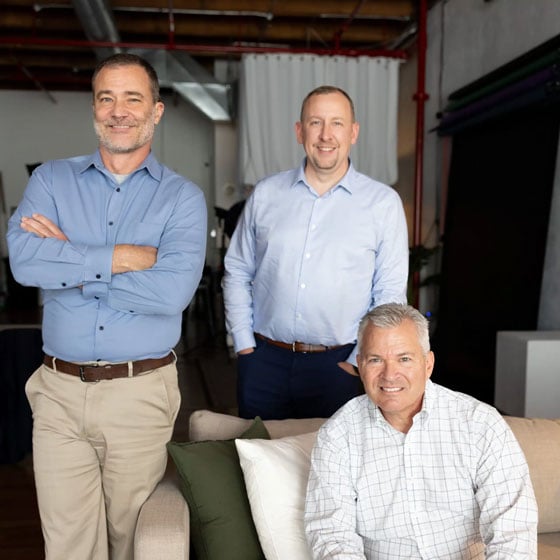 Hancock soon teamed with Jamison Clark and Nicholas Lynch to form HCL Critical Infrastructure. The company officially began operations in September 2025 with a focus on construction management for mission-critical environments where delays, disruptions, and downtime are not an option.
Today, HCL Critical primarily manages complex data center and warehouse projects, with healthcare facilities and advanced manufacturing also now becoming part of its long-term plan. Rather than self-performing construction trades, the company represents project owners via GMP construction delivery, bringing deep expertise in safety, planning, risk management, scheduling, and minimizing downtime and disruption to ongoing operations, and contracting top-tier trade partners and specialty firms to execute the work.
Hancock and his partners also put trust at the center of everything they do. All stakeholder relationships, from employees to clients to construction partners, are built on it, and Hancock sees his role as the chief guardian and champion of trust.
“We can’t overuse the word trust or think about it too much,” Hancock said. “Our business model is based on trust. If we say it, we’re doing it. Period. And we’ll do everything we can to figure it out and keep our word.”
That approach has clearly resonated in the marketplace. HCL Critical secured its first contract in December 2025 and has experienced extraordinary growth. The company has grown from its three founders to 17 employees, with plans to reach 25 employees in the near future. Hancock and his team are projecting annual revenue exceeding $40 million in the company’s first full year.
Supporting that growth requires a banking partner capable of understanding both the construction industry and HCL Critical’s vision.
A longtime industry colleague recommended Country Club Bank to Hancock as he was establishing the company. Country Club Bank community bankers Dan Teahan and Ryan Banes met with Hancock and his partners, listened to their strategic plan and committed to supporting the new venture immediately.
“They looked at the depth of experience across our company, listened to our story and trusted what we were doing,” Hancock said. “We’ll never forget that.”
Country Club Bank initially provided a line of credit to give HCL Critical the working-capital flexibility needed to launch and pursue new projects. As the company expanded, the bank increased that credit commitment and established operating, payroll and warehouse accounts tailored to the growing business.
Most recently, the bank financed a $750,000 crane for a major warehouse operation. The equipment was essential to receiving, storing and deploying owner-furnished equipment for a large data center project. The fast financing provided HCL Critical the capital to move quickly on an important growth opportunity.
“Every time I’ve picked up the phone or texted Ryan Banes, he’s always been available to talk and consider our request,” Hancock said. “We try to keep things simple and accessible, and they do, too. We like that.”
For Hancock, a strong banking relationship depends on openness and responsiveness. Those are also the qualities HCL Critical emphasizes with its clients and trade partners.
That shared approach has helped HCL Critical and Country Club Bank build a partnership capable of keeping pace with the company’s remarkable growth. As HCL Critical pursues new projects, enters new markets, and expands its team, Country Club Bank is ready and will rise to the challenge.
“I can’t think of a better partner than Country Club Bank,” Hancock said. “They’ve been fantastic. I couldn’t ask for anything better.”
Bank Branch Spotlight
More banking locations mean more ways to help
As banking has become increasingly digital, we’ve all gotten good at managing routine transactions from almost anywhere.
But when more complex questions arise, or an important financial decision must be made, there is still tremendous value in having a knowledgeable banker nearby.
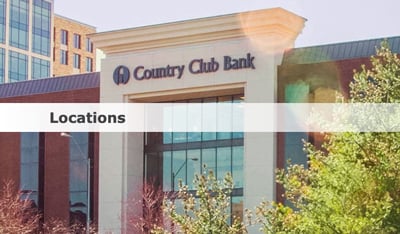 The combined Country Club Bank and FNBO network now numbers nearly 30 locations across the Kansas City metro area. Most importantly, it makes experienced bankers even more accessible to answer questions, provide practical guidance, and connect clients with specialists in commercial lending, treasury management, fraud prevention, mortgage lending, investments, and other financial services.
To discuss the evolving role of the modern banking branch location, we spoke with three leaders who help oversee the branch location network: Kim Thornton and Tim Rhodes, directors for Country Club Bank’s legacy locations, and Sarah Olson, director for FNBO locations in Kansas City and Texas.
Q: With so much banking conducted online, what role does a branch play today?
Sarah Olson: We provide advice and guidance in the moment. Clients can read about financial products online, but that is different from talking with someone who takes time to understand their goals and help them determine how to get there. We can educate clients, guide them through different stages of business or life, and identify needs they may not have considered.
Tim Rhodes: People bank with people. Banking is still relationship-driven, and our branches often serve as connectors. We can introduce clients to specialists within the bank, as well as trusted accountants, attorneys, and other professionals in the community.
Q: How will the combined branch network benefit clients?
Kim Thornton: One of the most exciting aspects of joining FNBO is the number of new resources available to our clients. Where we may previously have had two or three people to contact about a particular need, we may now have 10 or 20. That creates many more opportunities to connect clients with the right experts.
Olson: We are partners across the organization. A teller, branch manager, or branch-based commercial banker may not personally provide every service, but we know who can help. Our clients have an entire team at the ready, and our job is to make accessing that team as easy as possible.
Q: What questions are clients bringing to branches most often these days?
Rhodes: For business clients, many conversations center on fraud prevention. Clients may see an unfamiliar transaction, have questions about emerging threats, or want to understand how they can better protect their accounts.
Thornton: We also hear questions about treasury management, financing, and loan options. Clients frequently ask how technology can make banking easier. Also, if a business hires a new controller or CFO who will access its accounts, the branch can help update authorizations and establish that new relationship.
Q: What does a branch banking relationship look like in practice?
Rhodes: Recently, a local business came to one of our branches after experiencing some disappointing service levels from another bank. Our branch leaders took the time to get to know the business and brought together our commercial lending, treasury management, and merchant services specialists. We subsequently established deposit accounts, a line of credit, and commercial real estate financing. That one small branch interaction turned into a full banking relationship that now has the right level of support and service for that business.
Thornton: We also saw the value of branch relationships during the pandemic, when Country Club Bank employees worked extraordinarily long hours to help businesses obtain Paycheck Protection Program funding. I truly believe some of those businesses remain open today because their branch bankers were there when they needed them most.